How to plan a week by scene, not by outfit
Published Oct 17, 2026 · Updated Oct 18, 2026 · By June, Scene editor
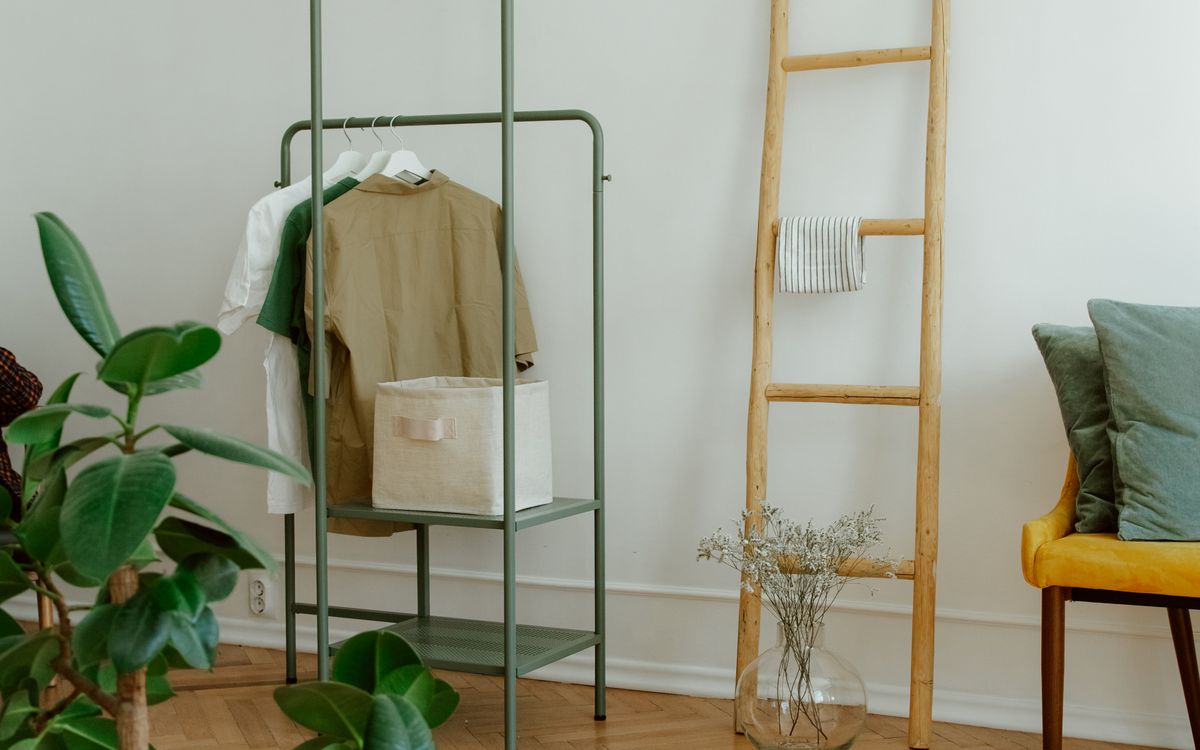
Most people get dressed by outfit. The calendar says the week is five workdays, one dinner, one market morning — but the closet is full of outfits that each solve one problem once. Planning by scene means deciding once per context instead of five times per morning. It’s the same wardrobe, fewer decisions.
Start with the calendar, not the closet
Read the week like a slate of commitments: every entry is a scene with a time, a place, and a formality level. Workdays with client contact, workdays without, the dinner on Thursday, the Saturday market, the gym at 6 a.m. Write them down — five to eight lines is normal. The list takes ten minutes, and it is the whole method.
Two questions per scene: what’s the dress level, and what will the weather do? Most weeks carry one level-3 scene and a lot of level 1 and level 2. The plan only gets hard when two levels share a single day — the morning meeting and the evening dinner. Those days decide the outfit; everything else can reuse.
Build outfits per scene, not per day
For each scene, decide three things in order: the base, the layer, the shoe. A workday base that also works under the Thursday dinner knit is worth more than two separate tops. The goal isn’t seven unique outfits; it’s the smallest set of pieces that covers every scene on the list.
Cross-scene reuse is the priority test. When a piece serves only one scene, it has to justify its hanger.
The pieces that earn space are the ones that appear in three or more scenes: the dark trouser that works at the office and at dinner, the coat that covers the market morning and the walk home. If you can’t name the scenes a piece serves, you’ll stop wearing it.
The weekend and workday boundary
Weekday scenes cluster around level 2 and 3 and share a silhouette: pressed shirt or fine knit, tailored bottom, clean shoe. Weekend scenes run level 1 and 2 and want comfort and layers. Keeping the two zones separate saves decisions — the work rotation and the weekend rotation rarely overlap, and the pieces that try to serve both, the smart-casual hoodie, serve neither.
The boundary has one crossing point: the pieces worn on both sides. A good coat, a good pair of boots, a good knit. Buy those at the level of the weekday side, and they’ll carry the weekend without thinking about it.
A routine that works
Sunday evening, twenty minutes. Write the week’s scenes, check the forecast for the swing rather than the single number, lay out anything that needs pressing or drying. Each morning the decision is already made — you’re dressing the scene, not inventing an outfit. When the week changes, a meeting added or a dinner canceled, edit the list, not the closet.
The wardrobe doesn’t grow from this routine. The decisions shrink.
Frequently asked questions
- How far ahead should I plan the week?
- One week is the right horizon. Further out and the forecast stops being useful; shorter and you're back to morning decisions. Add next week's known events as you hear about them, but commit on Sunday.
- What if a scene gets added midweek?
- Edit the list, not the wardrobe. Most added scenes are covered by pieces already on the rail — the point of planning by scene is that the system absorbs changes. Only buy for a scene that now repeats.
- How many outfits do I actually need?
- Fewer than you think. Most people need four to six base combinations for a week, because the layering pieces repeat across days. If your count keeps climbing, the problem is usually pieces that don't combine, not too few outfits.