What to wear to a fall market morning
Published Oct 12, 2026 · Updated Oct 14, 2026 · By June, Scene editor
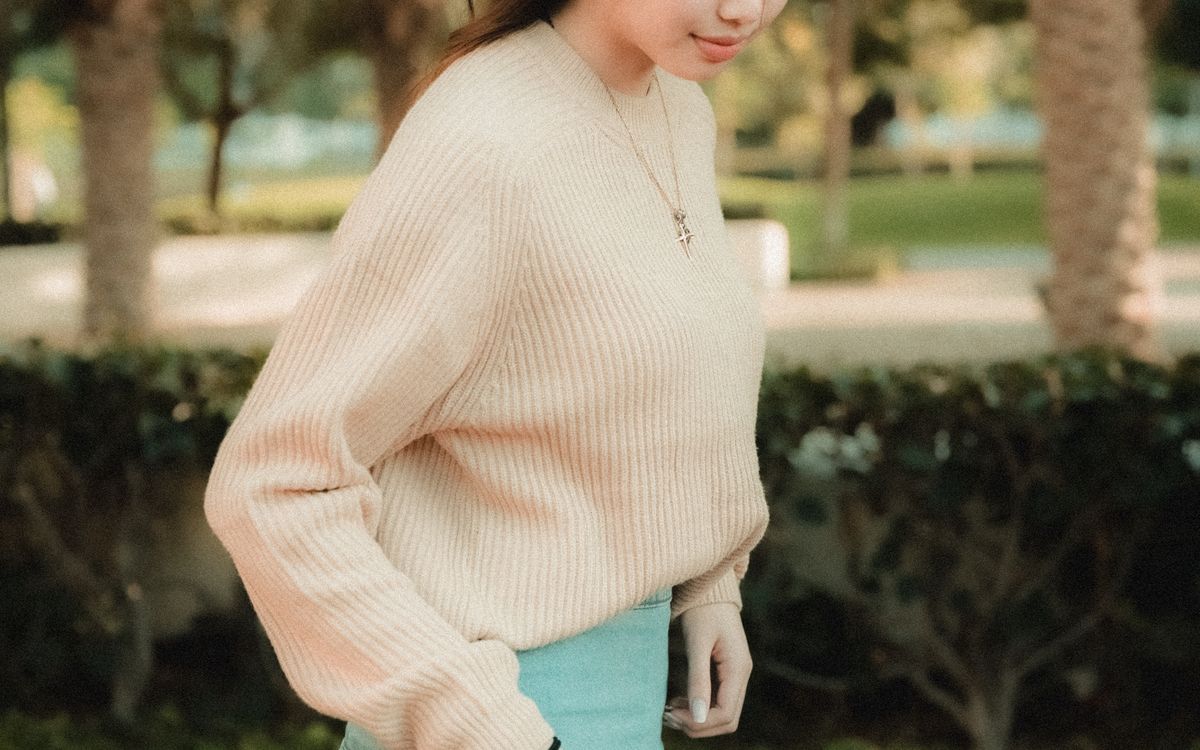
A market morning is one of the few scenes where the outfit has a job beyond looking right: it has to work with the ground, the temperature, and whatever you carry home. That makes it a good scene to plan from practical constraints inward.
Set the scene
Time: 7–11 a.m., most of the year. Where: a parking lot, a square, or a park path. Formality: level 1–2, with the emphasis on 1. The swing: cold at the start, 45–50°F in October, and mild by the time you leave. The ground is the detail that decides the shoes.
The three decisions
1. One warm layer, not three. A single mid-weight knit or a quilted vest over a base is enough for a two-hour morning. The trap is over-layering: a coat you’re carrying by 10 a.m. is a coat you resented at 9. If the forecast says below 45°F, add a scarf rather than a second jacket — it comes off into a bag.
2. Shoes that read the ground. Gravel, grass, and wet asphalt punish thin soles and light colors. A chunky-sole sneaker, a low boot, or a trail shoe handles all three. Skip anything you’d have to clean on the way home.
3. A bag with a job. Market bags fail in two directions: too small to hold produce, or too precious to set down. A canvas tote or a flat-bottomed basket solves both. Leather totes are fine if you’re buying flowers only — otherwise they become a weight problem by the second stall.
What to wear, specifically
Start with a long-sleeve base in a color that can take a splash — navy, olive, charcoal. Add a knit or a fleece vest. Trousers or dark denim, not light chinos, because market parking lots are not clean. A cap or a beanie if the sun is low; the light at 8 a.m. in October is genuinely in your eyes.
One accessory, maximum. A crossbody bag keeps both hands free for produce and money. A watch is the other option; anything more and you’ll be adjusting it while holding a squash.
Variations
If the market is indoors (a covered hall or a winter market), the forecast swing disappears and the outfit simplifies to level 2: knit, trousers, clean shoes, one bag. If you’re shopping for a dinner party that night, bring the tote and a second small bag for the fragile things; the walk home is where bags fail, not the stalls.
When the weather turns
A forecast for a market morning is reliably wrong by one category. A thin shell that folds into a tote costs nothing to carry and covers the ten minutes of drizzle that would otherwise end the trip. Wind matters more than rain at a market: it takes hats, lifts paper bags, and turns a loose scarf into a nuisance at every stall. A scarf that ties, and a bag that closes, are the two fixes worth making before you leave the house.
The scene rewards dressing down and carrying well. That’s the whole brief.
Frequently asked questions
- What time does a market morning actually start?
- Early enough to be cold — most farmers markets open between 7 and 9 a.m., when the ground is still holding the night's temperature. The scene usually ends by noon, by which point you'll have shed a layer. Dress for the start, not the middle.
- Are sneakers acceptable at a market?
- Yes, with a caveat: the ground is usually gravel, grass, or wet pavement. A flat-soled fashion sneaker works for the look but not the surface. Choose something with tread — a trail shoe, a chunky sole, or a boot — and the scene stays comfortable for two hours of standing.
- How big a bag do I need?
- Big enough to hold what you buy without becoming heavy. A canvas tote or a market basket handles a week of vegetables; a leather tote does not. If you plan to buy more than you can carry, bring a second foldable bag and leave it empty at the start.