Wear it, don't pack it: the transit wardrobe
Published Oct 18, 2026 · Updated Oct 19, 2026 · By June, Scene editor
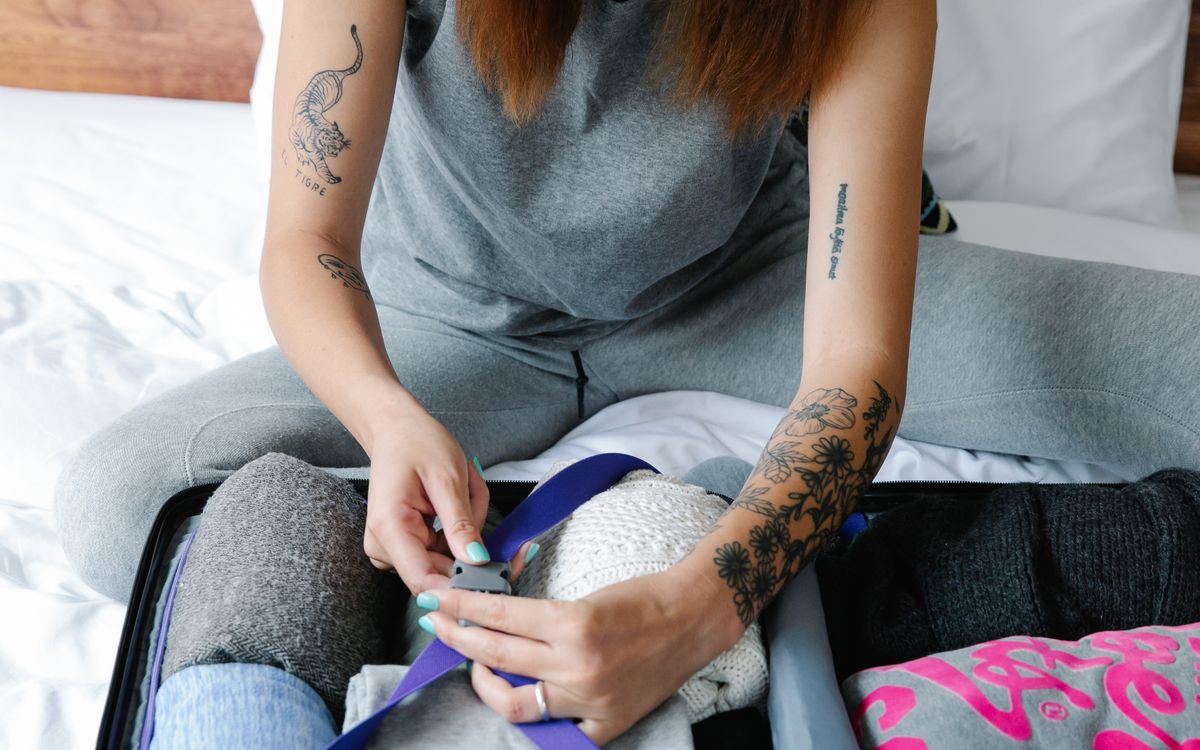
The flight is a scene, and it’s the one scene most packing systems ignore. Everything you wear on the plane is volume you don’t have to pack, and unlike a packing cube, it costs no weight allowance. The transit wardrobe isn’t a costume; it’s a way of moving the bag’s bulkiest contents onto your body.
Wear the volume, pack the weight
The rule: the bulkiest items travel on you. The coat, the heaviest knit, the second pair of shoes. A puffer that fills a third of a case takes no bag space at all on your shoulders, and the overhead bin never sees it.
The math runs the other way for dense things. A laptop, a camera body, a book — weight without volume is what cases are good at; volume without weight is what your body is good at. Sort the wardrobe along that line and the bag shrinks without buying anything.
A test before you zip the bag: hold the bulkiest packed item next to the bulkiest item you’re wearing. If the packed one is bigger, swap them.
The shoe rotation
Shoes are the most constrained slot in any bag — bulky, oddly shaped, and usually needed in one specific version. The standard rotation:
- Wear the heaviest pair on the plane. Boots, chunky sneakers, the pair with the most volume. On your feet they cost nothing, and they keep your feet warm at altitude.
- Pack the pair the scene needs. One pair in the bag, in a shoe bag, at the bottom. That is the whole shoe budget.
Layers that survive security
Security is a dressing test: whatever you’re wearing has to come off, go through the machine, and go back on in under a minute, in a queue, hands full.
- Full-zip over pullover. A zip jacket opens and closes without going over your head. A pullover means undoing everything you arranged around it.
- One outer layer, not three. A coat over a blazer over a hoodie is three bins and a pile of clothes with nowhere to put them. Pick the layer that does the most and wear only that one.
- Pockets empty of metal. Coins, keys, the metal bottle. Nothing rides in the transit layer’s pockets except what you’re willing to put in a bin.
- Keep the mid-layer on. In standard lanes, expect to divest the outer layer and the belt; TSA PreCheck keeps shoes, belts, light jackets, laptops, and liquids with you entirely. Design the outfit so one layer coming off doesn’t collapse the look.
The cabin temperature strategy
Cabins run cool, and the variability between carriers is real — our read, from a lot of hours in them. Dress for the cabin, not the terminal.
- The mid-layer is the thermostat. The layer that’s too warm on the ground is usually right at altitude. If the puffer is too much for the terminal, it is also the piece that would otherwise ride in the overhead bin — wear it.
- One layer you can add without standing. A scarf or a spare mid-layer in the personal item, for the passenger who runs cold. Cabins don’t do personal thermostats.
The transit wardrobe is the cheapest upgrade a packing system gets: no new bag, no new cube, just the decision to wear the volume instead of carrying it. For the same logic applied inside a five-piece system, see the coastal weekend capsule.
Frequently asked questions
- How much space does wearing the bulkiest items actually save?
- Roughly a third of the bag's volume, in our experience. The coat and the heaviest knit are the two largest single items in most wardrobes, and both can be worn. The trade is being warm in the terminal, which is the smaller problem.
- What shoes should I wear on a travel day?
- The bulkiest pair you own, and the easiest to move in. U.S. checkpoints stopped requiring shoes off in 2025, but some international airports still ask, and slip-ons or loose laces beat buckles and straps in either system.
- How do I handle a hot terminal and a cold cabin?
- Dress for the cabin in layers and keep the removable layer accessible. The mid-layer that is too warm on the ground is usually right at altitude; the outer layer goes in the bin at security and back on before boarding.