Fabric vocabulary: the words on the label, in plain language
Published Oct 13, 2026 · Updated Oct 15, 2026 · By Iris, Pieces & materials editor
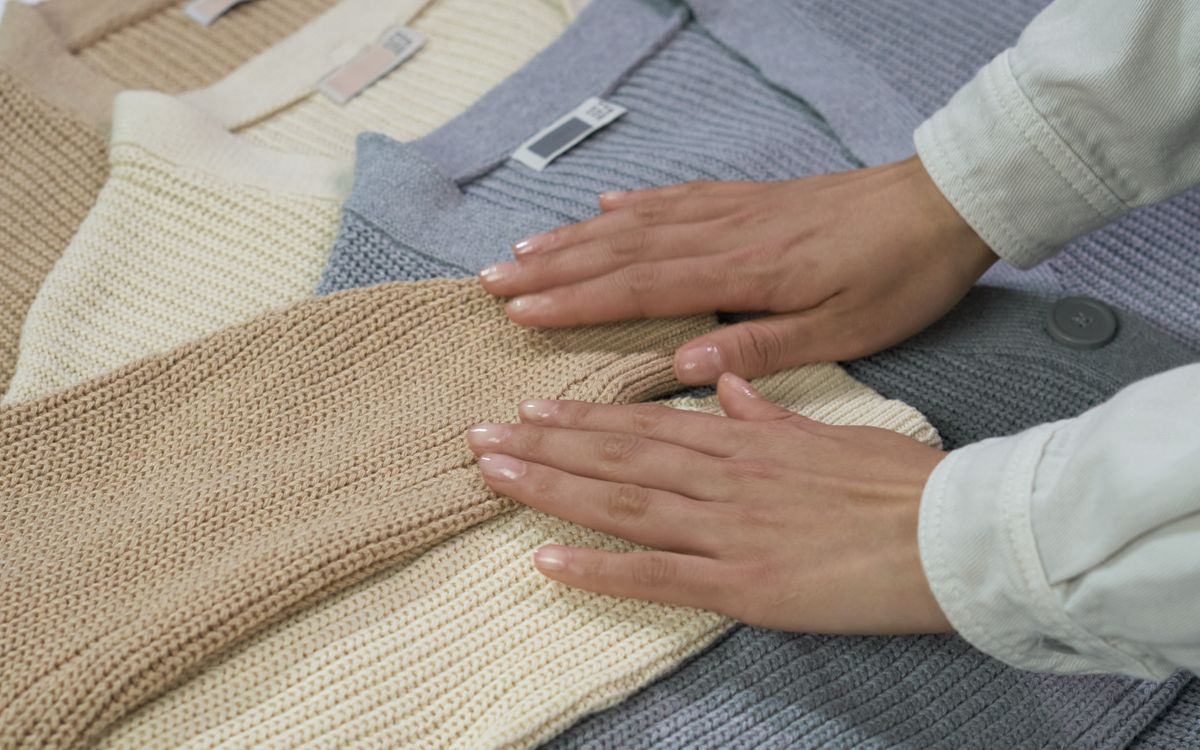
A fabric label stacks two vocabularies: the fiber, which is what the fabric is made of, and the weave, which is how it’s put together. The fiber gets the marketing; the weave predicts the behavior. Five words cover most of what you’ll meet.
The weave words
Poplin is a plain weave with a fine crosswise rib — the classic dress-shirt fabric. One thread over, one under makes poplin crisp, smooth, and breathable, which is why it’s the default for warm-weather shirts. The trade is that it wrinkles more readily than a twill of the same weight.
Twill is any weave with a diagonal wale — the ribs on a chino, the surface of denim. The diagonal structure packs threads tighter than a plain weave can, so twills drape softer, resist wrinkles, and hide soil. Denim is a twill; chinos are twills. A label that mentions a diagonal is telling you the fabric behaves like a chino.
Gabardine is a tight, steeply angled twill — denser than a chino twill and smoother to the touch. The tight structure sheds wind and light rain, which is why it became the classic trench fabric. Expect a crisp hand that holds a crease.
Jersey is the odd one out: not a weave at all but a knit, built from loops of yarn instead of crossed threads. That structure gives jersey its stretch and drape, which is why tees, polos, and most dresses use it. The trade is recovery: a jersey stretched too often starts to bag, and no pressing fixes it.
Flannel describes a finish, not a weave. A flannel shirt is usually a twill or plain weave brushed on one or both sides to raise a soft nap; the brushing is what makes it warm and what makes it shed lint for the first few washes. The label tells you about the surface, not the structure underneath.
GSM, the weight number
Somewhere on the label or the product page you may see a weight in gsm — grams per square meter. It’s the fabric’s mass per unit area, and the best single predictor of how a garment behaves: opacity, structure, season, and drape.
Typical ranges, as direction rather than spec: shirting around 110–150 gsm, tee jersey 150–220, trousers 250–350, outerwear above 400. Denim is usually quoted in ounces per square yard instead — 12 oz denim is about 407 gsm, since 1 oz/yd² converts to 33.9 gsm. Higher isn’t better; it’s a different garment. A 300 gsm shirt is an overshirt.
Reading blend percentages
The fiber list runs in descending order by weight, and the order tells you which fiber is doing the work. “60% cotton, 40% polyester” is mostly a cotton fabric with polyester added for durability and price; “60% polyester, 40% cotton” is a synthetic fabric with cotton for feel. Same two fibers, different garment.
Two details matter. Under US labeling rules, a fiber under 5% can be listed as “other fibers” unless it’s functionally significant — which is why “5% spandex” gets spelled out: it tells you the garment stretches.
And read small percentages as function, not value: two to five percent elastane is a comfort signal, not a quality one.
What to do with all this
When two shirts cost the same, the weave word and the gsm tell you which one behaves the way you want. When a garment disappoints, the label usually explains it — a jersey that bagged, a poplin that wrinkled, a flannel that shed. Buy the behavior, not the name.
Frequently asked questions
- Does a higher gsm mean better quality?
- Not by itself — it means a heavier, more structured fabric. A 140 gsm poplin shirt and a 300 gsm flannel overshirt can both be well made; they're simply different garments. Match the weight to the season and the job, and treat gsm as direction, not a grade.
- Is twill always more durable than poplin?
- Twill's tighter structure generally resists wrinkles and abrasion better at the same weight, which is why chinos and workwear use it. But durability also depends on the fiber and the finish — a tight poplin can outlast a loose twill. The weave predicts behavior; it doesn't guarantee lifespan.
- How much elastane is too much?
- Above roughly 5% and the fabric starts to rely on stretch for fit instead of being cut to fit — that's the point where a garment begins to lose its shape as the elastane ages. Under 5%, the stretch is a comfort feature; above it, ask what the cut would be without it.