Sunglasses, decoded: lens, frame, and fit
Published Oct 17, 2026 · Updated Oct 19, 2026 · By Iris, Pieces & materials editor
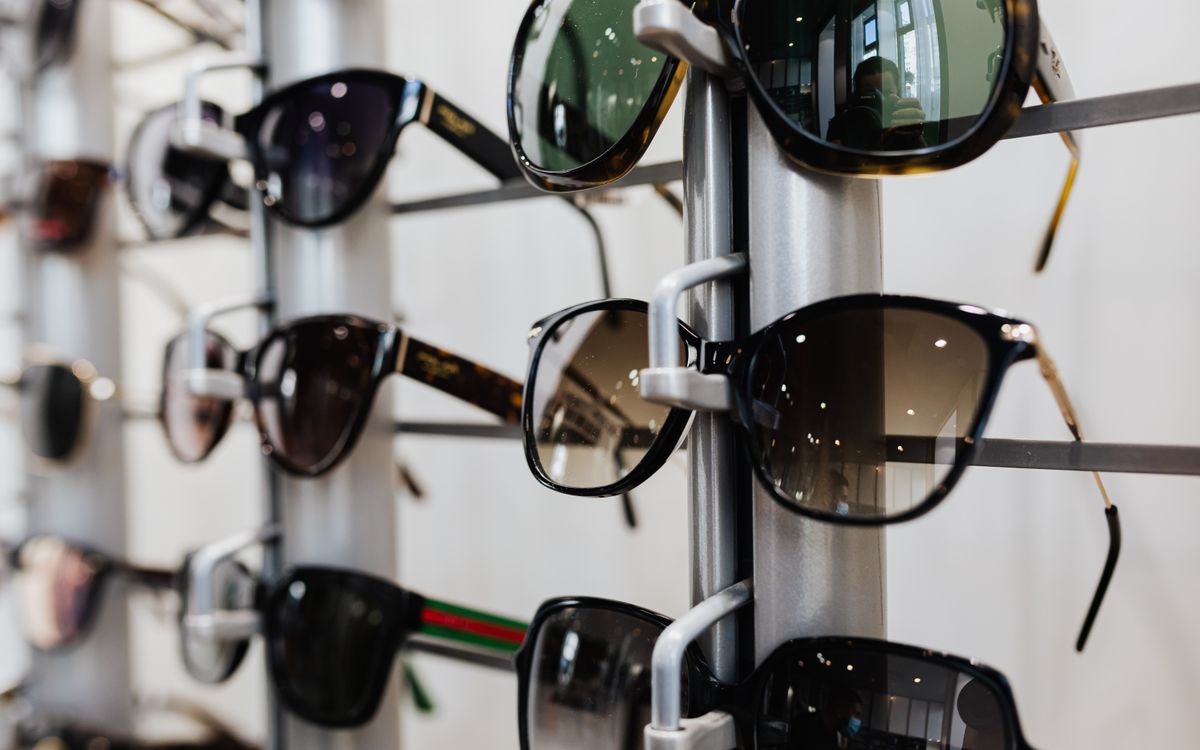
Sunglasses are sold on shape and bought on feel, and most of the buying advice is about the wrong two things. The lens does three separate jobs — blocking UV, cutting visible light, and killing glare — and a frame’s job is to hold the lens in front of your eyes at the right distance. Decode those and the category stops being a guessing game.
The lens does three jobs
UV blocking is the health part, and it’s invisible: you can’t see it, feel it, or judge it by how dark the tint looks. A dark lens without a UV treatment still passes UV. What you can verify is the claim — “100% UV” or “UV400” on the label or the product page.
Visible-light reduction is the tint’s job, and it’s measured in how much light the lens absorbs. Ray-Ban’s product pages state that the classic G-15 green lens “absorbs 85% of visible light” and blocks most blue light — a mid-depth tint that keeps colors natural. Gradient tints are dark at the top and clear at the bottom; mirror finishes cut brightness further but add scratch sensitivity.
Glare control is the polarized job, and it’s the one people misunderstand. Polarization filters the horizontally oriented light that bounces off flat reflective surfaces — water, wet road, snow, car hoods. Ray-Ban states its polarized lenses “block more than 99% of the reflected light.” What polarized does not do: add UV protection, or reduce overall brightness beyond what the tint already does.
Frame shape vs face shape
The face-shape rules (round faces take angular frames, square faces take round ones) are a starting point, not physics. Two measurements decide fit more reliably.
Frame width vs face width. The frame should end about where your face does at the temples. Spill past that and the temples splay; fall short and the frame floats.
Bridge fit. The frame should sit on the bridge of your nose, carried by the bridge or the nose pads — not clamp at the sides, not slide down when you smile.
Lens height is the third dial: taller lenses cut more side glare; shorter ones read lighter on the face.
Nose pads and clamping
This is where cheap sunglasses betray themselves. On metal frames, adjustable nose pads let you set where the frame sits — the Aviator’s wire frame carries them, which is a large part of why it fits so many faces. On acetate frames, the nose pads are molded into the frame and fixed; a bridge that’s too narrow pinches, too wide slides.
Temples matter too. They should follow your head’s contour and hold without pressure at the points above your ears. If you can feel the frame at three separate pressure points, the fit is wrong no matter how good the shape looks in the mirror.
What polarized actually solves
Polarized earns its upcharge in specific scenes: driving into low sun on a wet road, water, snow, and any scene with large flat reflective surfaces. In those conditions it cuts the glare that makes you squint, and the reported difference is immediate. For urban walking and general wear, it’s a smaller upgrade than the marketing suggests.
Two honest caveats from the pattern of user reports: polarized lenses can make some LCD and dashboard displays look odd, and they don’t touch the diffuse glare of an overcast sky.
What we’d pick
Three frames that split the job by material and shape:
- Ray-Ban Original Wayfarer Classic — the acetate default that fits nearly every face.
- Ray-Ban Aviator Classic — the metal teardrop with adjustable nose pads, in polarized.
- Ray-Ban Clubmaster Classic — the browline hybrid, also polarized.
The picks below break down what each frame does and when it earns its keep. Prices and availability move — check the live listing before buying.
The picks
Some links below are affiliate links — we may earn a commission at no extra cost to you.
Ray-Ban Original Wayfarer Classic
The defaultThe trapezoidal acetate frame that has been the safe answer since the 1950s — the one shape that reads correctly at every level from a t-shirt to a linen shirt. The fit runs slightly narrow by modern standards, which is part of why it suits so many faces: the frame ends about where the face does at the temples.
- + Acetate frame holds its shape and takes an optician's adjustment
- + Proportions suit oval, square, and heart-shaped faces
- + Polarized versions exist across the color range
- – Narrower than current oversized trends — intentional, but check it against your face width
- – Acetate weighs a little more than a wire frame of the same size
Ray-Ban Aviator Classic
The metal optionThe teardrop double-bridge in metal, offered on Ray-Ban's US site in a polarized configuration. The detail that matters is the adjustable nose pads: a wire frame you can set on the bridge instead of hoping the acetate fits. The polarized lens is the one for driving into low sun on wet roads.
- + Adjustable nose pads — the most forgiving bridge fit in the category
- + Metal frame sits light on the face
- + Polarized lens option for glare off roads and water
- – Teardrop shape suits square and oval faces; rounder faces amplify the curve
- – Thin metal temples bend more easily than acetate in a bag
Ray-Ban Clubmaster Classic
The browline optionThe browline hybrid — acetate top rim, metal bottom — and the polarized version of it. It reads more styled than the Wayfarer without going statement, and the acetate top brow keeps the frame's weight off the nose. A good answer when a plain acetate frame reads too plain and a full wire frame reads too technical.
- + Browline shape adds character without oversized proportions
- + Polarized lens option on the classic model
- + Acetate brow plus metal lower rim balances weight and visibility
- – The style is more specific than the Wayfarer — less of a default
- – Two-material construction has one more joint to loosen over years
Comparison
How the three frames differ in material and shape.
| Ray-Ban Original Wayfarer Classic | Ray-Ban Aviator Classic | Ray-Ban Clubmaster Classic | |
|---|---|---|---|
| Frame material | Acetate | Metal | Acetate brow, metal rim |
| Shape | Trapezoidal | Teardrop double bridge | Browline |
| Nose pads | Fixed acetate | Adjustable | Fixed acetate |
| Polarized option | Yes, across colors | Yes | Yes |
| Suits | Most faces | Square and oval | Most faces, styled read |
Prices and availability change — the buttons above check the current listing. Last verified October 2026.
Frequently asked questions
- Do dark lenses mean more UV protection?
- No. Tint darkness controls visible light; UV blocking is a separate property of the lens and its coating. A very dark lens without a UV treatment still passes UV. Look for a stated '100% UV' or 'UV400' claim rather than judging by shade.
- Is polarized worth paying for?
- If you drive, fish, or spend time on water or snow, yes — it cuts the glare that comes off flat reflective surfaces. For urban walking and general wear the difference is smaller than the marketing suggests. Ray-Ban states its polarized lenses block more than 99% of reflected light.
- How do I know if a frame will fit my face?
- Width first: the frame should end about where your face does at the temples. Then the bridge — the frame should sit on the bridge of your nose, not clamp or slide. Face-shape rules are a starting point; these two measurements are what actually decide fit.